Commandant Siegfried van Lier

Johannesburg Vrijwilliger Corps & ZARPs

Early Role

Siegfried van Lier served as 1st Lieutenant Quartermaster for the Staff of Infantry in the Johannesburg Vrijwilliger Corps (JVC) and during the Anglo-Boer War as Lieutenant . He also held the position of Artillery Lieutenant in the Johannesburg Police Corps (ZARPs), one of the most famous and disciplined units of the Zuid-Afrikaansche Republiek (ZAR). His leadership placed him at the forefront of some of the fiercest battles of the war.

Battle of Berg-en-Dal (Dalmanutha), 27 August 1900

Commandant van Lier played a central role during the last pitched battle of the Anglo-Boer War at Berg-en-Dal. Alongside Commandant Ph.R. Oosthuizen and Lieutenant F. Pohlman, van Lier commanded a detachment of only 60–70 men positioned on an isolated kopje. Facing overwhelming odds, their small unit endured:

  • Bombardment from over 40 heavy artillery pieces, including lyddite shells and Maxim fire.
  • A direct assault by 1,500–2,000 British troops, advancing in a semicircle under cover of fire.

Early on the morning of the 27th, Inspector Kommandant P.R. Oosthuizen and S. Van Lier (ZARPs) occupy trenches dug during the night. From there, the commanders go to the front guard post of the police on the hill. The group sat quietly behind their sconces, ready to take on the British.

Despite suffering heavy losses, van Lier’s detachment held their ground for hours. During the engagement, he was seriously wounded by shrapnel in the thigh and side, and at one point was nearly buried alive when a lyddite shell struck the rocks beside him.

Acts of Bravery

Van Lier’s courage was matched by his men:

  • Lieutenant F. Pohlman was killed by a shot to the temple after encouraging his men under fire.
  • Sergeant John Pretorius fell mortally wounded, remembered as a young man who often spoke fondly of his bride-to-be.
  • Sergeant-Major Biljon risked his life to drag the badly wounded van Lier to safety, ignoring the storm of bullets around them.

Of the 67 Johannesburg Police Corps men, only 31 answered roll call the next day.

Recognition

Though forced to retreat under overwhelming pressure, van Lier and his men received personal commendations from General Louis Botha, General Ben Viljoen, and General Lucas Meyer. Their stand drew admiration even from foreign military observers who were astonished by their discipline and bravery against such odds.

Personal Account

Van Lier later described his experiences in a letter to his father in Amsterdam (November 1900), published in the Dutch press (NRC, 20 November 1900). His words captured both the horror of the bombardment and the unshakable determination of his comrades.

Historical Photograph

A photograph of the Johannesburg Police Corps (ZARPs), taken shortly before the Battle of Berg-en-Dal, was published in Neerlandia (Jaargang 5, 1901) from the Moesman Collection (University of Pretoria Special Collections).

  • Van Lier is pictured top right, standing alongside Commandant Ph.R. Oosthuizen and Lieutenant F. Pohlman.
  • The image captures the small group of men who became legendary for their stand at Berg-en-Dal.

(Image courtesy of University of Pretoria, Special Collections: Moesman Collection)

The Johannesburg Police Corps

Shortly before the well-known Battle of Berg-en-Dal on 27 August, this group photograph was taken. In the foreground are seven brave men who, under the name of the Johannesburg Police Corps, became so renowned.

The two articles dedicated to the storming of this same position — worth preserving beyond the fleeting life of a daily newspaper — were written by Commandant of the Volunteer Cavalry with the Johannesburg Police Corps, Mr. S. van Lier (pictured top right). These articles appeared in the Nieuwe Rotterdamsche Courant of 20 November, and re-reading them while viewing this group is deeply moving.

At the top left is P. de la Rey, private; next to him, in order: Commandant Ph.R. Oosthuijsen, wounded and captured; F. Pohlman, First Lieutenant, killed by a shot to the right temple — he who had not seen his dear wife and children for more than a year, he who with Oosthuijsen and Van Lier for almost a year had faced countless dangers shoulder to shoulder, he, the hero of Colenso. Then Van Lier himself, who, with two shots in the right thigh and his side pierced by a shell fragment, incredibly escaped death, and to whom Botha and Viljoen came the morning after the battle to express their great satisfaction for his displayed bravery.

Bottom left: Sergeant John Pretorius, fatally struck in the head, the strong and handsome man who always spoke so lovingly of his bride, whom he had left on the eve of marriage to go to war; Sergeant-Major Biljon, missing, likely killed, after he had saved Van Lier from certain death; Sergeant-Major John Smith, wounded with two bullets in the leg.

At Helvetia, while the roar of cannon still echoed from Machadodorp, where some of General Viljoen’s commandos held back the enemy, roll call was held for the Police Corps. Of the 67, only 31 answered their names.

Neerlandia is not a war journal, but the names and images of these brave men rescue them from oblivion, full of admiration.

M013 – Serjeant George Cribbs

Served in the 2nd Brabant’s Horse service number 559 and was Severely Wounded at Senekal 28th June 1900 with Corporal Thomas Henry Wilson who served in the Pioneer Railway Regiment.

Serjeant George Cribbs was discharged Medically Unfit for duty two months later on the 30th August 1900 due to his injuries received at Senekal.

The Brabant’s Horse unit histories / unit pages explain the operations in that district (Senekal / Richmond / Wepener / Biddulphsberg / Bethlehem) and confirm the unit was heavily engaged in late June 1900.

Rossegger, Edgardo (Cap.) da Trieste

The Italian volunteers for the Boer cause.

By Alberto Rosselli (Translated by L. Pavese)

December 25, 1899, Austral Africa.

In a clearing near the city of Dundee, in Southern Transvaal, a tall and bearded officer of the Boer army wearing a worn broad-brimmed hat and carrying a Mauser rifle is reviewing a curious-looking unit, consisting of three hundred soldiers, dressed and armed in the most varied and colorful ways.

The officer is haranguing the soldiers, inciting them to fight the British oppressor who is bent on wiping out the Boer state’s freedom dream. At first sight, the scene would not be an incongruous one because, a few weeks before, the Boer president Paul Kruger had begun the mobilization of the Afrikaners against Her Majesty’s army. This unit, however, had been formed by Italians residing in the Transvaal who were determined to give their contribution (together with German, Austrian, Irish, French and American volunteers) to the cause of the African Dutch, whom Queen Victoria had promised to eradicate from the land of gold and diamonds.

At the head of the Italian legion (or, as General Piet Joubert called it, “Die Italiaanse Korps” or the “Italian Scouts”) was a thirty-four-year old Piedmontese fighter and war correspondent, Giuseppe Camillo Pietro Ricchiardi, born in Alba and already a veteran of many campaigns in the Philippines, Siam, and China, behind a sword as well as his typewriter.

The war between the Boers and Great Britain had broken out only a couple of months before (on October 10, 1899), and in Colenso, by that December, Ricchiardi already had had the chance to show off his worth as a fighter. At the beginning of November, near Chievelrey, he had led a victorious assault against a British armoured train and captured several enemy soldiers and officers, among whom there was a young reporter by the name of Winston Spencer Leonard Churchill, who had been attached to the South African Light Horse Colonial Regiment.

General Louis Botha had tasked Captain Ricchiardi, who already led a small group of 50 Italian volunteers, with organizing in Johannesburg a volunteer battalion formed almost entirely by Italian miners, cooks, hunters, farmers, ranchers and explorers; and the former Second Lieutenant of the 4th Cavalry Regiment “Genoa” had not waited to be asked twice. Thanks to his charisma, his persuasive eloquence, his looks that resembled the figure of a Garibaldian leader, and the help of First Lieutenant, Count Pecci and Major Caldara, Ricchiardi was able in record time to gather and train in the use of weapons about 280 compatriots.

In January 1900, Ricchiardi was promoted Feldcornet (Major) and was given permission to appoint his own curious and almost entirely Italian and aristocratic staff, consisting of Captain Edgardo Rossegger, from Trieste, the Genoese-Dutch-Italian Giobatta Van Ameringen, and the Lieutenants (and Barons) Von Carlsberg, Paratico di Lantieri and Von der Lippe. Lieutenant and reporter Eugenio Boccalone (from Genoa), Corporals Rizzola (from Cesena), and Carmelo and Francesco Degiovanni (from Catania) completed the group.

Ricchiardi, who was a gourmand, had also inserted in the staff the chief mule driver Silvio Sella, who, notwithstanding his name (sella means saddle in Italian) and his job, happened to be also the best chef in Johannesburg.

On January 24, 1900, during the bloody and famous battle of Spionkop, the members of the Italian legion covered themselves with glory, charging with bayonets a large British unit and causing it to flee. The following month, the Italian Brigade (as the Britons called it) took part in more fights and, because of its extraordinary maneuvering capability and aggressiveness, was mentioned several times in the war bulletins from Pretoria. In May, following the addition of many fresh French volunteers, the “Italian Legion” changed its name to the “Latin Brigade,” reaching a force of 2000 men.

On September 1st, 1900, Ricchiardi (who by now was known as the African Garibaldi) was promoted to Colonel and commander in chief of all the foreign volunteer units (the German Legion, the Austrian Corps, the International Irish Brigade, the American Explorer Group and the French Corps); but the Italians remained the hard core of the Latin Brigade.

When the Autumn of 1900 was approaching, horse mounted patrols of legionnaires specialized in sapping actions behind the British lines, harassing the enemy units. After blowing up an ammunition depot, the commandos led by the Genoese Giovanni Carcioffo left the following jeering message for Lord Roberts, the commander in chief of the British army: “We will be back again to see you. Tell your soldiers not to sleep so much! The Italian Legion!”

But notwithstanding the heroism of the Boer army and its international allies, the war was turning in favor of Great Britain. The Britons by then were enjoying an overwhelming, to say the least, superiority in terms of number and equipment. At the beginning of Fall of 1900, President Kruger, after having thanked and praised the Legion, ordered it to disband, but not before he had regularly compensated the troops. A few days later, all the volunteers crossed the border into Mozambique, heading to Lourenço Marquez (Maputo), where a steamer was waiting for them. Only a small group of diehards (not more than twenty and all Italian) remained behind in Boer land. Their names are unknown. They would fight till the end in the area of Komatipoort (in northern Transvaal) beside their Boer brothers.

Colonel Ricchiardi and the other Italian and foreign veterans (386 out of the original 2000) landed in Trieste on October 31, 1900, welcomed by a small crowd and a reporter from the daily newspaper “Il Piccolo,” who described the scene as follows: “I meet Colonel Ricchiardi aboard the steamer Stirya. Notwithstanding the suffering, he’s still young: he’s a splendid type of gentleman-soldier…Before ordering his men to disembark, he asks a boy to play the Boer national anthem, one last time, with the harmonica…all the volunteers uncovered their heads and followed… A solemn and sad song rose from the bridge and it ended with a thunderous Hurray for Kruger! Hurray for the free Transvaal!”

The epic of the “Italian Legion” was over.

Alberto Rosselli is an Italian historian and an author who also contributes to several daily newspapers. He edits the Italian magazine Storia Verità (appropriately called the “non politically-correct history magazine”), from which this article was taken and translated with his permission.

Extracts from http://planetoplano.blogspot.com/…/die-italiaanse-korps…

Bernard de Rockstro Malraison

Bernard de Rockstro Malraison was a prominent figure in late 19th and early 20th-century Johannesburg, contributing significantly to both the city’s cricketing heritage and its military history.

Early Life and Arrival in Johannesburg

Details about Bernard’s early life remain scarce, but he was among the early European settlers who arrived in Johannesburg following the discovery of gold in the Witwatersrand. Like many of his contemporaries, he was drawn to the burgeoning mining town, seeking opportunities amidst the rapid urban development.wandererscricket.co.za

Founding Member of the Wanderers Cricket Club

In 1888, Bernard de Rockstro Malraison became one of the founding members of the Wanderers Cricket Club, established by a group of young rugby players who had migrated to Johannesburg from other mining towns like Kimberley. The club was formed during a period when Johannesburg was rapidly expanding, and its founders sought to create a space for social and sporting activities. The Wanderers Cricket Club quickly became a central institution in the city’s sporting community, providing a venue for cricket matches and other events. The club’s grounds, known as the Old Wanderers Ground, hosted 22 Test matches from 1895 to 1939 before being redeveloped in 1946 .wandererscricket.co.zaWikipedia

Military Service and the Second Boer War

During the Second Boer War (1899–1902), Bernard de Rockstro Malraison served with distinction. While specific details of his military engagements are limited, his involvement in the conflict places him among the many who contributed to the defense of the South African Republic during this tumultuous period. The war was marked by significant battles, including the Battle of Doornkop near Johannesburg, where British forces clashed with Boer commandos .Anglo Boer War

Legacy and Family

Bernard’s legacy continued through his son, William Henry de Rockstro Malraison, who followed in his father’s footsteps both in cricket and military service. William played first-class cricket for Transvaal in the 1904/05 season, appearing in two matches during the Currie Cup. He later served with the South African Army in the 1st South African Horse during World War I and tragically died on May 31, 1916, from fever while serving in German East Africa. He was buried at the Dar es Salaam Cemetery .Wikipedia

Through his contributions to Johannesburg’s cricketing community and his service during the Second Boer War, Bernard de Rockstro Malraison played a pivotal role in the city’s development during a formative period in South African history.

Missing Medals

George Anthony Murray 1914 – 1915 WW1 Star

Lenox Murray British War Medal

Charles Molteno Murray WW1 Victory Medal


Lieut John Edward Briscoe TRIO Missing


Schalk Willem Pyper (of Pypers of Pijper)


Kaptein Theo Jooste Heilbron Kommando


Thomas John Sloman Moyse


Johannes Hendrick Mentz WW1 star and BWM


Sergt George Bolton CMR Union of South Africa MSM missing


Frederick E watermeyer BWM

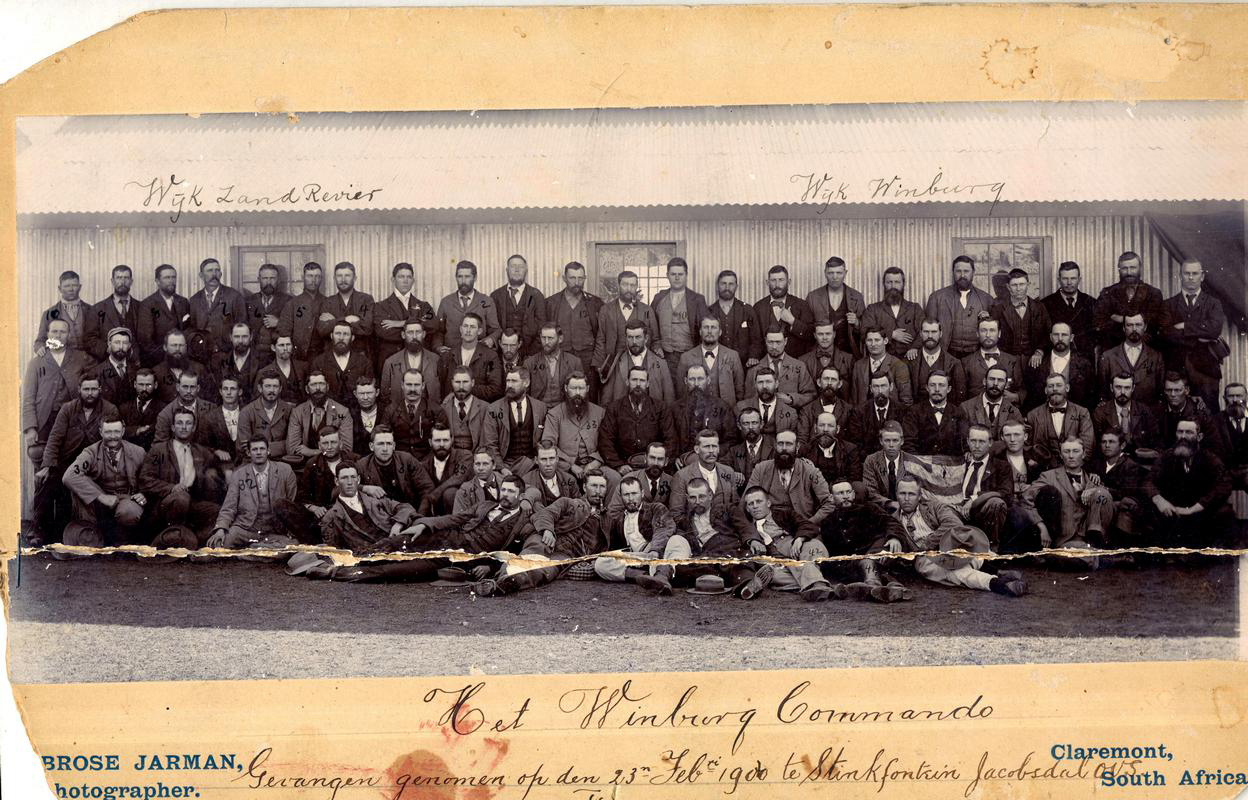
Prisoner of War – Wyk Zandrivier and Winburg

“Credit to Nico Moolman. Here is his Facebook post link.”

Burgers van Wyk Winburg

  1. G. Stegman
  2. J. du Toit
  3. A.N. du Preez
  4. PET v.d. Walt
  5. S. Smit
  6. J. Kriel
  7. Johannes van Zyl
  8. H.K. Hienuenkuizen (TBC)
  9. W. Wessels
  10. B. Haasbroek
  11. S. Frans
  12. N. Vermaak
  13. A.N. Du Preez
  14. A. Lemcken
  15. Jan Viljoen
  16. T. Kok
  17. W. Botes
  18. P.J. Rossouw
  19. D. Ritchie
  20. G.P. Rossouw
  21. S. Rossouw
  22. J. Lewis (TBC)
  23. J. xxoorne (TBC)
  24. J. Greyling
  25. P. Ferreira
  26. H. v.d. Watt
  27. G.K. Theron
  28. F. Gibson
  29. R.J. Schutte
  30. H.B. Swart
  31. M.H. Wessels
  32. S. Theunison
  33. C.L. de Jager VC (could be veldcornet)
  34. J. Nienaber
  35. B. Wolmarans
  36. F. Kok
  37. J. van Straat
  38. Hansman ?
  39. D. McIneny
  40. F. van Reenen
  41. John Bell
  42. Jacques de Villiers
  43. Jacobus Meintjies
  44. Jan Gildenhuis
  45. A.M. Ferreira
  46. D. de Villiers
  47. W. Adam
  48. J. Adam
  49. M. Smuts
  50. F. Oelfkin
  51. J. v.d. Berg
  52. Philip Cronje
  53. P. van Rooyen

Burgers of Zandrivier

  1. Erasmus
  2. H. Human
  3. L. Steyn
  4. P. Fourie
  5. A. Barnard
  6. G. Wessels
  7. J. du Preez
  8. F. Botha
  9. A. Le Roux
  10. H. Venter
  11. T. Cronje
  12. Kleynhans
  13. T. Wessels
  14. A. Cronje
  15. H. Müller
  16. D. Fourie
  17. J. Le Roux
  18. J. Scholtz
  19. C. Cronje
  20. B.S. Wessels VC
  21. G. Ferreira (TBC)
  22. J. Ferreira
  23. L. Hartzenberg
  24. J. Fourie
  25. Muller
  26. Helgard
  27. W. Wessels
  28. W. Wessels
  29. J. Vermeulen
  30. Bino
  31. J. Pienaar
  32. M. Fourie
  33. J. Meyer
  34. H. de Nekker
  35. P. van Wyk
  36. P. Botha
  37. A.M. Meyers or Beyers

De namen der Gesneuwelden by onze Gevangenneming (Names of individuals who died while in captivity)

Van Wyk Winburg

  • H. Viviers VC
  • C. Putter
  • H. Bouer
  • J. Haasbroek
  • J. Viljoen (oorleden te voor neming van …)
  • xxxxxxxzen (could be v. Westhuizen
  • A. Greyling
  • Frans Venter
  • H. Pienaar
  • W. Coetzee
  • J. Schutte

LVW – Lint voor Verwonding opgedaan gedurende de Anglo-Boeroorlog, 1899-1902

(Wound Riband for Wounds received during the Anglo-Boer War)

This distinctive riband shall be granted to those officers and members of the forces of the South African Republic and Orange Free State who, being burghers of those States, were wounded in action during the Anglo-Boer War, between 11th October, 1899, and 31st May, 1902, and are now, a citizens of the Union of South Africa, serving in the Union Defence Forces or liable so to serve if called out under the South Africa Defence Act, 1912.

LVW Cetificate Type A – Issued in 1922
LVW Cetificate Type B – Issued in 1924
LVW – Vorm C – Burger Barend Petrus Buitendag Potchefstroom Kommando – Approved in 1921
LVW – Vorm C – Burger Jan Hendrik Lagrange – Standerton Kommando – Approved in 1922
Here you can see how a VORM B was used but with the amendments of VORM C – Kommandant Hennie van Rensburg – In Richmond he was hiding behind a tree, bullet entry wound is under the Left eye and exit wound was Left ear. “Onder Linkeroog in en onder Linkeroor uit” He healed in the field while still on Kommando but had later years hearing problems.

ABO – Medalje voor de Anglo-Boeroolog, 1899-1902 (Medal for the Anglo-Boer War, 1899-1902)

  • All ranks who did military service during the war.
  • Served in the field between 11 October 1899 and 31 May 1902 both days inclusive.

TYPE A SUSPENDER A (INSTITUTION – OCTOBER 1937)

  • Medals with straight non-swivelling suspenders as used on the British War Medal (1914-1918) and with naming in indented large block capitals (often unevenly positioned) as on the South African W.W.I. issue of the B.W.M.
Anglo Boer War medal with Type A Suspender A
World War 1 – British War Medal suspender matching ABO on left
Anglo Boer War Medal – Type A naming same as Dekoratie voor Trouwe Dienst Medal
DTD and ABO naming for Type A – Kommandant HJJ van Rensburg

TYPE B (OCTOBER 1937 – FEBRUARY 1942)

  • Medals with the WWI non-swivelling suspenders as above but with a thinner and smaller, more even type of indented block capital naming as found on the South African WWII Africa Service Medal.
This image has an empty alt attribute; its file name is DSC09474-1024x432.jpg

ABO – Korporaal J.M. Lehmann – Approved in 1941 notice full naming of Rank.

TYPE C SUSPENDER (FEBRUARY 1942 – 1982)

  • Medals with the small thin type of edge lettering and straight non-swivelling suspenders as used for the Africa Service Medal.
  • Under type C there are also variations where a square dot is found after the initials and cases where it is a round dot. An interesting sub-variety also occurs on at least one batch in 1942-43 where the figure ‘6’ was used instead of the letter ‘G’ of BURGER and, in at least one instance, even as the ‘S’ in ARTILLERIS.
Anglo Boer War Medal with Type B Suspender Same as African Service medal on Right
African Service Medal Suspender matching the ABO on left

ABO Burger A.S. Louw Cape Rebel Calvinia Kommando with Generaal Manie Maritz – Approved November 1942 – Notice the SQUARE DOTS
ABO of Kommandant A.P.J. Diedericks (Killed in Action at Magersfontein) Approved in 1954 – The “M” can be seen is different from Type A and does not go all the way down. Notice the ROUND DOTS
ABO Korporaal P.J. de Jager – Reitz Kommando – Approved in 1968 notice rank abbreviation
Vorm “B” Burger Thomas Frederick Dreyer from Wakkerstroom Kommando – Approved in 1923
Vorm “B” Burger Gerhardus Johannes de Jager – Ermelo Kommando – Approved in 1921 Early Print

Webinar 2 – Awards of the Anglo-Boer War (1899–1902) to Boers

REGULATIONS

  • Instituted in terms of Union of South Africa Government Gazette No. 2307, 21 December 1920
  • Regulations made by his Royal Highness the Governor-General-in-Council
  • Awarded to burghers who rendered true and faithful service to the military forces of the Governments of the South African Republic and the Orange Free State
  • Below documents in PDF
D.T.D. and ABO Medal Regulations & Rulings – Cover
D.T.D. and ABO Medal Regulations & Rulings – Page 1
D.T.D. and ABO Medal Regulations & Rulings – Page 2
D.T.D. and ABO Medal Regulations & Rulings – Page 3
D.T.D. and ABO Medal Regulations & Rulings – Page 4
DTD and ABO Medal Regulations & Rulings - Page 5
DTD and ABO Medal Regulations & Rulings – Page 5

Also very nice visual illustration of the order of South African Medals.

Wikipedia

References

  • AG (4) ABO 207 – 207/1 – BOX 1 – Gazette 21st December 1920
  • OMRS “Miscellany of Honours”  No. 9 1992 by Henk Loots
  • 6th August 2020 SAHPA.org Webinar with Dewald Nel and Munroe I Swirsky
  • SAHPA ABO Collection by Eric de Jager
css.php